Why Is My Jaw So Tight?
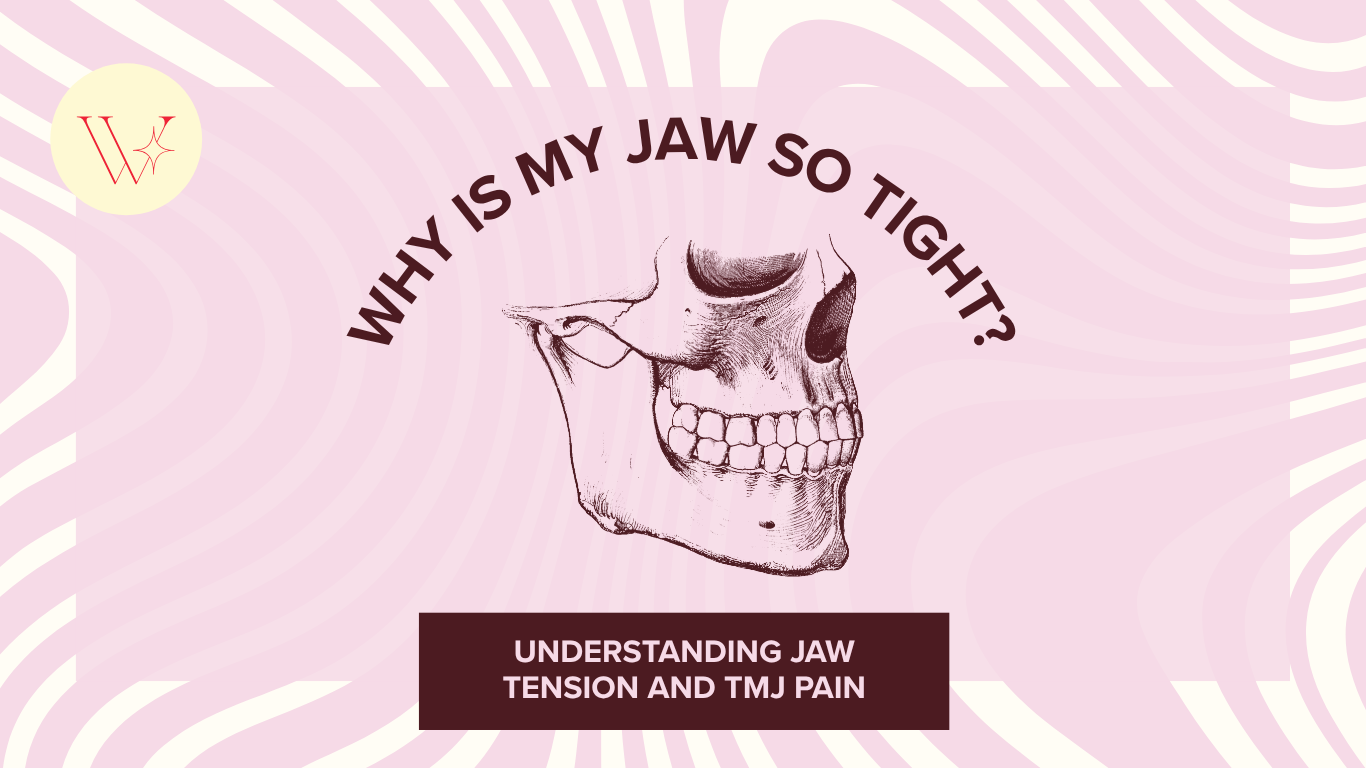
Understanding Jaw Tension and TMJ Pain
Do you wake up with a sore jaw, tension headaches, neck stiffness, or even ear pain?
You're not alone. Jaw tension and temporomandibular joint (TMJ) dysfunction affect millions of people each year. While many people assume jaw pain is strictly a dental issue, it often involves much more than the jaw itself. The muscles, joints, nerves, posture, stress levels, and even the neck and upper back can all play a role.
The good news? Effective, non-surgical treatment options can help reduce pain, improve movement, and address the root causes of jaw tension.
At Withn, we take a whole-body approach through chiropractic care, massage therapy, physical therapy, dry needling, and movement-based rehabilitation.
What Causes Jaw Tension?
Jaw tension rarely comes from a single source. More often, it's the result of several contributing factors working together.
Common causes include:
Stress and anxiety, which can lead to clenching and grinding
Poor posture, especially from long hours at a desk or on devices
Muscle trigger points in the jaw, neck, and shoulders
Teeth grinding (bruxism), particularly during sleep
Past injuries, including whiplash or facial trauma
Pelvic floor tension
High impact sports and activities
Mouth breathing
Tongue ties
Because the jaw and neck are closely connected, dysfunction in one area often affects the other.
Why Women Experience TMJ Disorders More Often
Research shows women are more likely than men to experience TMJ-related pain and dysfunction.
Several factors may contribute, including hormonal fluctuations, joint hypermobility, pelvic tension, higher stress levels and higher rates of conditions such as migraines and chronic pain disorders (Zieliński & Pająk-Zielińska, 2024).
Stress can also play a role. Many women carry significant physical, emotional, and caregiving responsibilities, which can contribute to muscle tension, jaw clenching, and nervous system overload.
For many women, jaw tension isn't just a jaw problem—it's a reflection of how the entire body is responding to stress, posture, hormones, and daily demands.
How Withn Can Help
Chiropractic Care
The jaw, neck, and upper back work together. Restrictions in one area can create tension and compensation patterns elsewhere.
Chiropractic care may help improve:
Neck and upper back mobility
Jaw mobility and alignment
Postural alignment
Joint function
Nervous system regulation
By improving movement and reducing stress on surrounding tissues, many patients experience less tension and improved jaw function.
Massage Therapy
Jaw pain is often accompanied by tight muscles in the face, neck, and shoulders.
Massage therapy can target muscles both inside and outside the mouth and jaw:
Temporalis muscles
Masseter muscles (primary chewing muscles)
Neck and shoulder tension
Trigger points contributing to headaches and facial pain
Many patients are surprised to discover that relieving tension in the neck and shoulders can significantly improve jaw symptoms.
Physical Therapy & Dry Needling
Physical therapy addresses the movement patterns that may be contributing to TMJ dysfunction.
Treatment may include:
Therapeutic exercises
Postural retraining
Manual therapy
Breathing and nervous system regulation techniques
Dry needling is another tool that can help release tight muscle trigger points associated with jaw pain and headaches. Research suggests dry needling may improve pain and function when used as part of a comprehensive treatment plan (Ferreira et al., 2024; Vier et al., 2019).
A Whole-Body Approach Works Best
Jaw tension is rarely just about the jaw.
Many patients find lasting relief when treatment addresses the entire chain—from posture and neck mobility to muscle tension, stress, breathing patterns, and daily movement habits.
By combining chiropractic care, massage therapy, physical therapy, dry needling, and personalized exercise strategies, it's often possible to reduce pain, improve function, and help prevent symptoms from returning.
If you've been living with jaw tension, headaches, neck pain, or TMJ symptoms, know that conservative treatment options are available—and you don't have to live with the discomfort forever.
References
Ferreira, L. A., et al. (2024). Dry Needling in Treatment of Temporomandibular Joint Disorders: A Systematic Review.
Vier, C., Almeida, M. B., Neves, M. L., Dos Santos, A. R. S., & Bracht, M. A. (2019). The effectiveness of dry needling for patients with orofacial pain associated with temporomandibular dysfunction: A systematic review and meta-analysis. Brazilian Journal of Physical Therapy, 23(1), 3-11.
Zieliński, G., & Pająk-Zielińska, B. (2024). Association between Estrogen Levels and Temporomandibular Disorders: An Updated Systematic Review. International Journal of Molecular Sciences, 25(18), 9867.