Why Strength Training Is Essential for Women Over 30
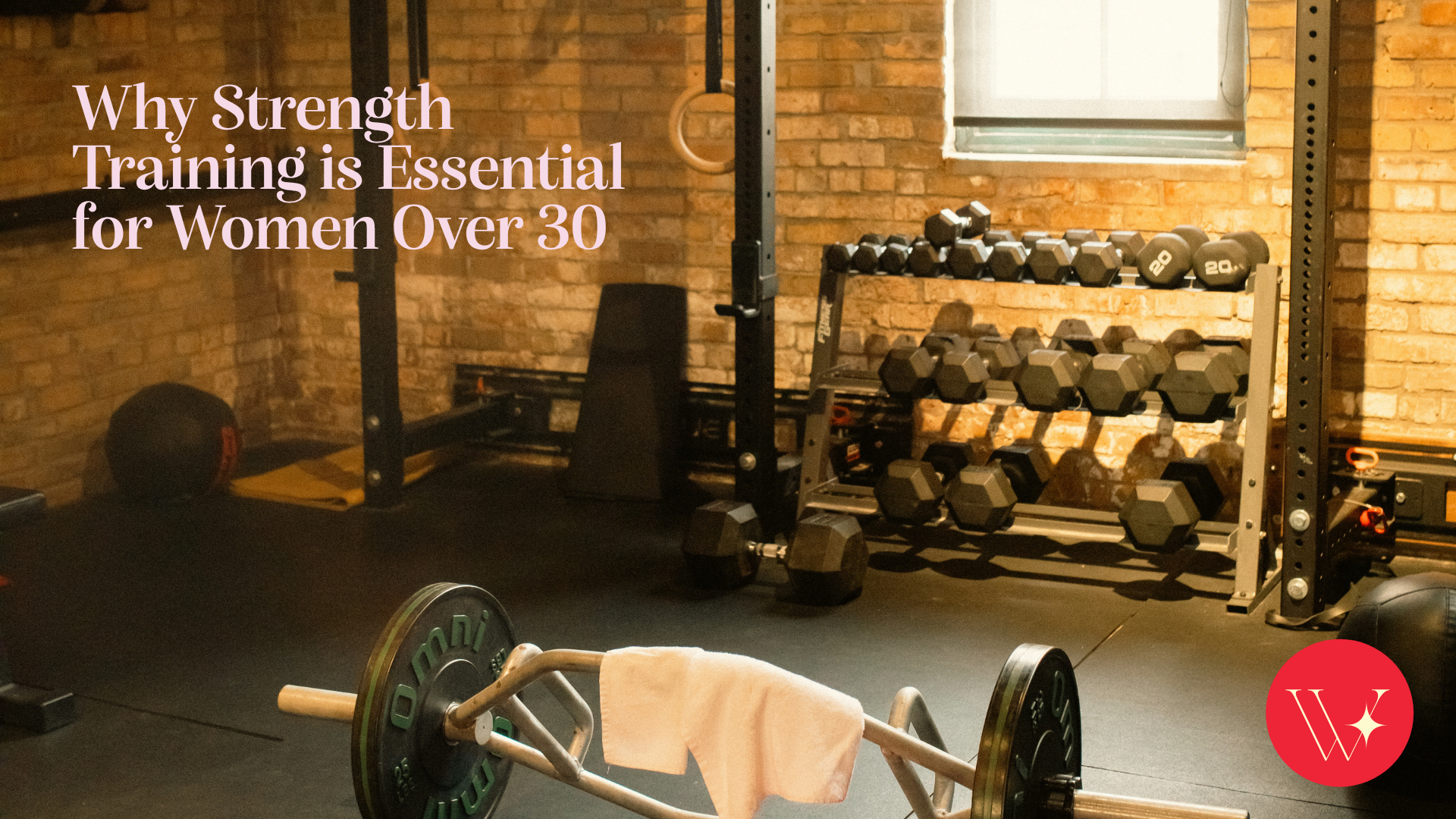
For many women, aging is often framed around appearance — wrinkles, weight changes, or metabolism. But one of the most important conversations women should be having in their 30s and beyond is about maintaining strength for long-term health, mobility, and quality of life.
Strength training is not just about fitness. It is one of the most effective ways to support healthy aging, protect bone density, preserve independence, reduce pain, and maintain the ability to move confidently through daily life.
The good news: resistance training is one of the most researched and effective tools for slowing — and even reversing — many of these changes.
Muscle Loss Begins Earlier Than Most Women Realize
Adults begin losing muscle mass around age 30 through a process called sarcopenia. Research shows adults lose approximately 3–8% of muscle mass per decade after age 30, with the rate accelerating later in life (Harvard Health Publishing, 2023).
For women, hormonal shifts during perimenopause and menopause can further accelerate declines in both muscle and bone density. Lower estrogen levels are associated with increased risk of osteoporosis, fractures, joint discomfort, and decreased physical resilience.
According to the National Institute on Aging, maintaining muscle strength is one of the most important predictors of healthy aging and independence (National Institute on Aging, 2024).
Strength Supports Mobility and Independence
One of the greatest benefits of strength training is preserving the ability to move well over time.
Simple daily activities — carrying groceries, climbing stairs, lifting children, getting up from the floor, maintaining balance on uneven surfaces — all rely on muscular strength and joint stability.
As women age, reduced strength can contribute to:
Chronic joint pain
Poor posture
Decreased balance
Increased fall risk
Reduced mobility
Difficulty recovering from injuries
Strength training also improves the muscles surrounding joints, which can reduce stress on knees, hips, shoulders, and the lower back. This is especially important for women experiencing chronic pain, stiffness, or instability from sedentary lifestyles or repetitive daily strain.
Strength Training Can Help Reduce Pain
Research increasingly shows that properly programmed resistance training can help reduce chronic pain, especially in the:
Lower back
Neck and shoulders
Hips
Knees
Strengthening muscles improves joint support and movement patterns, reducing strain on the body over time.
A review published in the Journal of Orthopaedic & Sports Physical Therapy found that resistance exercise is effective in reducing chronic musculoskeletal pain and improving physical function in adults (Steiger et al., 2021).
For women who spend long hours sitting, caregiving, working at desks, or managing repetitive movement patterns, strength training can help restore stability and resilience throughout the body.
Strength Training as Part of Recovery and Rehabilitation
Strength training is also one of the most important tools for recovery after injury, surgery, accidents, or chronic pain conditions.
After an injury, the body often compensates for weakness or instability by shifting movement patterns. Over time, this can create additional strain, muscle imbalances, and recurring pain.
Research shows that prolonged inactivity after injury can accelerate muscle loss and decrease physical function, especially in adults over 30 (National Institute on Aging, 2024).
Progressive strength training during rehabilitation can help rebuild:
Joint stability
Balance and coordination
Muscle support around injured areas
Functional movement patterns
Confidence in movement
Long-term resilience against re-injury
Exercise-based rehabilitation has been shown to significantly improve pain and physical function in patients recovering from musculoskeletal injuries and chronic pain conditions (Smith et al., 2022).
Strength-focused rehabilitation can be especially beneficial for women recovering from:
Surgical procedures
Motor vehicle accidents
Sports injuries
Pregnancy and postpartum changes
Chronic neck and back pain
Hip and knee instability
Repetitive stress injuries
Recovery is not just about reducing pain temporarily — it is about rebuilding a body that feels supported, stable, and capable long-term.
The Core Protocol
Compound Movements: Instead of light weights or generic high-repetition classes, Dr. Stacy Sims - the leading specialist and researcher on women’s physiology - suggests using heavy resistance (such as squats, deadlifts, and overhead presses).
Frequency: Aim to lift heavy at least 3 times a week.
Intensity: Lift with a low rep range (6–8 repetitions) and leave only 1–2 reps in reserve, challenging the muscle rather than lifting for "tone"
Strong Bodies Support Long Lives
Women are often taught to make themselves smaller, quieter, or less physically demanding as they age. But maintaining strength is not about aesthetics — it is about preserving the ability to move through life with confidence, stability, resilience, and independence.
Strength training is
preventative care
pain management
mobility insurance
long-term health maintenance
And for women over 30, building strength may be one of the most important investments in future quality of life.
It’s never too late to start. Anna can help you develop a plan, personal training, and help you with recovery as a Physical Therapist.
Book a session with our onsite Physical Therapist at Withn here.
______________________
References
Bone Health & Osteoporosis Foundation. (2024). Women and osteoporosis. https://www.bonehealthandosteoporosis.org
Harvard Health Publishing. (2023). Age-related muscle loss and sarcopenia. https://www.health.harvard.edu/exercise-and-fitness/age-and-muscle-loss
Journal of Orthopaedic & Sports Physical Therapy. (2021). Resistance training for chronic musculoskeletal pain: A systematic review. https://www.jospt.org
National Institute on Aging. (2024). Exercise and physical activity: Your everyday guide from the National Institute on Aging. https://www.nia.nih.gov/health/exercise-and-physical-activity
Smith, B. E., et al. (2022). Exercise-based rehabilitation for musculoskeletal conditions: A systematic review and meta-analysis. British Journal of Sports Medicine, 56(18), 1031–1039. https://bjsm.bmj.com/content/56/18/1031